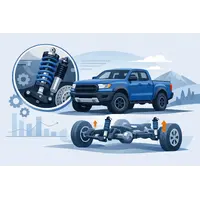
A Ford Ranger that feels harsh unloaded, sags with a canopy and tools, or bottoms out on corrugations is usually telling you the same thing - the factory suspension is no longer matched to how the ute is actually being used. That is where a Ford Ranger suspension upgrade makes a real difference, not just for lift, but for control, load support and day-to-day drivability.
The mistake many owners make is shopping by lift height first and purpose second. A Ranger used as a work ute in Melbourne traffic, a weekend beach rig, and a touring setup carrying drawers, a fridge and recovery gear do not need the same spring rate or shock package. If you get that part wrong, even good brand-name gear can feel average.
Most Ranger owners start looking at suspension for one of four reasons. The ute sits low in the rear once accessories go on. It rides poorly over broken roads or corrugated tracks. It feels vague or unsettled when towing. Or they want extra clearance for touring and off-road use.
A proper setup should improve stance, but that is only part of the job. The better result is a vehicle that holds weight properly, keeps tyres in contact with the ground, and feels more predictable when the surface gets rough. On-road comfort matters too. Plenty of utes spend more time on suburban streets and country highways than they do on rutted climbs, so there is no point fitting an overly aggressive kit that becomes tiring to live with.
This is why suspension should be matched to constant load, accessory weight and intended use. Bullbar, winch, dual batteries, canopy, roof rack and drawer systems all change what the vehicle needs from its springs and shocks. Towing adds another layer again.
When people talk about suspension upgrades, they often lump everything together. In practice, each component does a different job, and the way they work together determines whether the ute feels sorted or compromised.
Coil springs or front struts support weight and set ride height at the front. Leaf springs handle rear load support and ride height. Shock absorbers control movement, helping the Ranger settle after bumps instead of bouncing through them. If one part is mismatched, the whole package can feel off.
For example, heavy-duty rear leaf springs can be a smart choice for a Ranger carrying tools every day, towing regularly, or running a constant canopy fitout. But if the vehicle is mostly empty during the week and only loaded occasionally, that same heavy spring pack can leave the rear feeling too firm. In that case, a medium-rate spring or a setup supported by airbags may make more sense.
The same goes for shocks. Quality monotube and foam cell options both have their place. Some drivers want sharper control and improved heat management for long corrugated runs. Others just need a reliable all-round touring setup with better handling than tired factory dampers. There is no single best answer across every Ranger model and use case.
The easiest way to narrow down a Ford Ranger suspension upgrade is to be honest about what the ute does most of the time, not once or twice a year.
If the tray or tub carries weight every day, focus on load-rated rear springs and shocks designed to control that extra mass. This kind of Ranger benefits from suspension that resists sag, stays level under tools and materials, and handles speed humps or rough job site access roads without constantly hitting the bump stops.
Too soft and the ute wallows. Too stiff and it can skip around when unloaded. The sweet spot is a kit rated for your normal working weight, not your absolute maximum once in a blue moon.
Touring Rangers tend to accumulate weight quickly. Bullbar, winch, underbody protection, long-range tank, canopy, drawers and camping gear all add up. If towing is part of the picture, rear support becomes even more important.
This is where matched spring and shock packages really earn their keep. Better control under load improves confidence, especially on uneven country roads. Airbags can also be useful for levelling when towing, but they are not a substitute for the correct spring rate. Think of them as support, not a band-aid for an undersprung rear end.
A lot of Ranger owners want extra clearance and a tougher stance without turning the ute into a chore around town. For that, a moderate lift with quality shocks and sensible spring rates is usually the better option than chasing maximum height.
A well-chosen 40-50mm lift can improve clearance, approach and departure angles, and room for larger tyres while keeping ride quality civilised. Go too far without supporting components and geometry corrections, and you can create more problems than you solve.
Lift height gets most of the attention because it is easy to see. What matters more is how that lift affects handling, suspension travel and legal fitment.
For many Australian Ranger owners, a modest lift is the smart move. It gives practical ground clearance, improves the look of the ute, and works well with quality shocks, coils and leaf springs. Once you move higher, supporting parts such as upper control arms and other correction components become more relevant, particularly if you want the vehicle to drive properly and maintain alignment.
There is also the question of tyre size, guard clearance and local regulations. Bigger is not always better if the result is tyre rub, poor steering feel or a setup that attracts the wrong kind of attention at inspection time.
Suspension is not the place to gamble on unknown gear just because the advertised lift looks good. Ranger owners generally do best with established 4WD brands that have proven vehicle-specific kits, replacement parts support and clear load options.
That is why names like Dobinsons, Tough Dog, Bilstein and Blackhawk keep turning up in serious 4WD setups. Each has its own strengths depending on budget, driving style and intended use, but the common thread is proper fitment and known performance. Buying a complete, matched kit also takes a lot of guesswork out of the process compared with piecing together random components.
At 4WDSuspension, that fitment-first approach matters because Rangers across different series, drivetrains and build years are not all the same. The right suspension package should match the exact vehicle as well as the way it is loaded and driven.
One of the biggest mistakes is choosing suspension based on appearance alone. A ute that sits high in the car park can still drive poorly if the shocks are average or the springs are wrong for the load.
Another is underestimating accessory weight. A steel bullbar and winch can quickly overwhelm standard front suspension. The same goes for rear accessories. By the time a canopy, drawer system and recovery gear go on, the vehicle may need a very different rear spring than originally planned.
There is also a tendency to overbuild. Some owners buy the heaviest spring option available thinking it covers every future scenario. Often it just creates a harsh ride when the vehicle is not loaded. If your Ranger spends most of its life empty, build for that reality first.
Sometimes springs and shocks are enough. Other times, it makes sense to go further. If your Ranger is lifted, heavily accessorised or used hard off-road, supporting components can improve the end result.
Upper control arms can help maintain geometry and alignment on lifted front ends. Steering dampers may improve steering feel, especially with larger tyres. Airbags can help with occasional towing or variable loads. None of these should be treated as automatic add-ons, but they can be worthwhile depending on the build.
The key is to avoid a piecemeal approach that solves one issue while creating another. Suspension works best as a system.
Good suspension is not just about the purchase price. Value comes from getting a setup that suits the Ranger the first time, lasts well in Australian conditions, and does not need to be replaced because the original selection was wrong.
That usually means looking beyond the cheapest advertised lift kit and paying attention to load rating, shock quality and vehicle-specific fitment. A more suitable kit often saves money and hassle over the life of the ute, especially if it is used for work or regular touring.
If you are not sure where to start, begin with the basics: exact Ranger model, current accessories, constant load, towing plans and the kind of roads or tracks you drive most. That information will get you much closer to the right answer than asking for the tallest kit available.
A Ranger with the right suspension feels more settled, carries weight properly and gives you confidence when the road turns rough. Get that balance right, and every drive - loaded, unloaded, on-site or out bush - becomes a lot easier.
Compare every option in our Ford Ranger lift kit and suspension range, including the Next-Gen Ranger and Ranger PX/PXII.


Add your favourites to cart


Log into or create your Afterpay account, with instant approval decision

Your purchase will be split into 4 payments, payable every 2 weeks
All you need to apply is to have a debit or credit card, to be over 18 years of age, and to be a resident of country offering Afterpay
Late fees and additional eligibility criteria apply. The first payment may be due at the time of purchase
For complete terms visit afterpay.com/terms