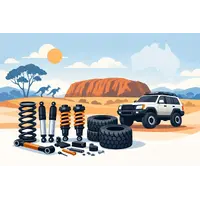
Sticker shock usually hits when you realise a lift kit price on its own is only part of the job. The real suspension lift kit cost depends on your vehicle, how you use it, the brand level you want, and whether you need extra gear to make the setup work properly under load, on-road and off-road.
For Australian 4WD owners, that matters because a cheap kit that rides badly, sags with tools in the tray, or needs correcting parts later often costs more in the long run. If you drive a Hilux, Ranger, D-Max, Navara, Pajero, Wrangler or LandCruiser, the smartest way to budget is to look at the whole package, not just the headline price.
The biggest factor is what is actually included. Some lift kits are basic spring and shock packages designed to refresh tired factory suspension and add moderate lift. Others are complete vehicle-specific systems with matched coils or leaf springs, upgraded shocks, bushes, U-bolts, struts, torsion bars, control arms or airbag support.
Brand also plays a big role. Established names such as Dobinsons, Tough Dog, Bilstein and Blackhawk generally sit above entry-level options because you are paying for proven valving, durability, local support, and fitment that suits common Australian conditions. That matters if your 4WD does more than school runs and the odd gravel road.
Then there is vehicle use. A touring wagon with a constant rear drawer system, long-range tank and roof load needs a different setup from a Ranger ute that is empty most of the week but tows on weekends. The more specific the spring rate and component choice, the better the outcome - but it can shift the price up.
As a rough guide, an entry-level suspension lift kit cost for a basic 4WD setup can start around the lower four figures for parts only. Mid-range kits from recognised brands usually sit higher, especially when they include quality shocks and load-rated springs. Premium kits with more advanced dampers, heavy-duty hardware or extra correction components can move well beyond that.
Installation is a separate cost unless you are fitting it yourself, and for most buyers it should be budgeted from the start. Once labour, alignment and any extra parts are added, the total bill can climb quickly.
A realistic ballpark for many Australian 4WDs looks like this in broad terms. A simple parts-only package may be one thing, but a properly fitted setup with the right supporting components often lands noticeably higher. That is normal, not a blowout, because suspension is one of those areas where fitment quality and parts matching make a real difference.
This is where plenty of buyers get caught. You might see a kit advertised at a sharp price, but the fitted price can be very different once workshop time and vehicle-specific needs are factored in.
A parts-only price usually covers the listed components and nothing more. A fitted price may include installation, wheel alignment, and sometimes removal of old suspension. If the vehicle has seized bolts, worn bushes, previous modifications or added accessories that complicate the job, labour can increase.
That is why comparing quotes needs a bit of care. One kit may look cheaper until you realise it does not include the springs you actually need for a bar, winch or canopy. Another may cost more upfront but save you from replacing undersprung rear coils six months later.
Not every 4WD is priced the same because not every suspension layout is the same. Independent front suspension utes and wagons often require different component combinations to solid axle setups, and some platforms simply need more correction work once lifted.
A Hilux, Ranger or D-Max might need a straightforward matched kit for a common 40mm to 50mm lift. A Wrangler or LandCruiser with more specialised suspension geometry may push the overall spend higher, especially if you are chasing off-road articulation as well as decent road manners.
Older vehicles can also add cost because the job may uncover worn steering or suspension components that should be replaced at the same time. That is not upselling - it is avoiding the headache of bolting fresh suspension onto tired hardware.
This is the section worth paying attention to, because extras are often what separate a decent budget estimate from the final invoice.
Upper control arms are a common add-on for some independent front suspension vehicles, especially when lift height and alignment angles start to work against factory geometry. They are not always required, but when they are, they can be money well spent for tyre wear, alignment and travel.
Airbags may be added for owners carrying variable loads, particularly in utes used for both work and weekend touring. They are not a replacement for the correct springs, but they can improve load support when chosen properly.
Other extras can include greasable shackles, U-bolts, castor correction, steering dampers, diff drop components, bushes, torsion bars or upgraded leaf packs. If your current suspension is badly worn, replacing only half the system rarely delivers the result you want.
Sometimes yes, sometimes no. If the vehicle is lightly used, stays close to stock weight and just needs a basic refresh with modest lift, a lower-priced option can make sense. But if you tow, load the tray, run accessories, or spend proper time off-road, the cheapest setup is often false economy.
Ride quality is one of the first places the difference shows up. Cheap kits can feel harsh when empty, vague at speed, or underdamped over corrugations. They may also settle quickly if the spring rates are not up to the task.
The better question is not whether the kit is cheap or expensive. It is whether it suits the way your vehicle is actually used. That is where recognised brands and fitment-specific advice pay off.
The best way to budget is to work backwards from your vehicle setup. Start with what is bolted onto the 4WD now - bullbar, winch, canopy, drawers, tools, fridge, towball weight, rear bar, long-range tank. Then think about what is being added in the next year, not just what is on the vehicle today.
From there, choose the lift height that makes sense. For many Australian 4WDs, around 40mm to 50mm is the sweet spot for clearance, stance and practicality. Higher is not always better, and chasing extra lift can mean more correction parts, more compromise and more cost.
Finally, ask for a complete figure that covers the expected package. That means parts, labour, alignment and likely supporting components. If you are comparing products across brands, compare them on inclusions and intended load rating, not just sticker price.
In Australia, lift height and modification rules vary by state and territory, so cost is not purely about parts. A setup that creates engineering or compliance issues can end up costing more than a properly planned legal lift.
Tyres, accessories and suspension all contribute to the final vehicle height. If you are already running larger tyres and planning other changes, that needs to be part of the conversation before ordering parts. A legal, usable setup is always better value than one that creates roadworthy headaches later.
Real value comes from buying a kit that matches the vehicle, the load and the job. For some owners that means a sharp-priced complete kit on a daily-driven ute. For others it means stepping into a better shock package because they tow, tour or spend serious time on rough tracks.
At 4WDSuspension, the best results usually come from choosing by fitment and use case rather than chasing the cheapest number on the page. That approach helps avoid buying twice, and it gives you a setup that actually improves clearance, control and carrying ability.
If you are pricing up a lift, think beyond the first figure you see. The right suspension should feel sorted on the road, handle the load you carry, and hold up when the trip gets rough - and that is usually where the best money is spent.
Related guide: Toyota Prado 150 lift kit buying guide


Add your favourites to cart


Log into or create your Afterpay account, with instant approval decision

Your purchase will be split into 4 payments, payable every 2 weeks
All you need to apply is to have a debit or credit card, to be over 18 years of age, and to be a resident of country offering Afterpay
Late fees and additional eligibility criteria apply. The first payment may be due at the time of purchase
For complete terms visit afterpay.com/terms