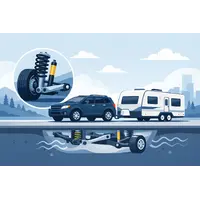
What Suspension Suits Towing Caravan?
You usually notice the wrong towing setup before you understand it. The rear sags, the headlights point at the trees, the van starts nudging the ute around on rough bitumen, and suddenly a weekend away feels harder than it should. If you are asking what suspension suits towing caravan loads, the short answer is this - not the stiffest setup, not the tallest lift, and not a random airbag kit thrown at a tired factory suspension.
The right suspension for towing a caravan depends on how much ball weight you carry, how often you tow, what vehicle you drive, and whether the same 4WD also has to handle school runs, job sites or touring. That is where plenty of buyers get caught out. They shop for a towing fix, but what they really need is a matched load-management setup.
For most Australian 4WDs and utes, the best suspension for towing a caravan is a vehicle-specific upgrade built around the rear load, supported by quality shocks and, where needed, airbags for adjustment. That might mean constant load leaf springs in the rear of a Ranger or D-Max, upgraded coils in a Prado or Pajero, and shocks valved to control extra weight without making the vehicle miserable when unladen.
Factory suspension is built as a compromise. It is meant to carry an average load, ride softly enough for daily driving, and keep costs down. Once you add a towball download, passengers, tools, recovery gear, drawers and a full touring load, that compromise starts to show. The vehicle can squat at the rear, lighten up at the front, and lose control over bumps and corrugations.
A proper towing suspension setup aims to do three things. It keeps ride height under load, controls body movement, and maintains predictable steering and braking. If it does not improve those three areas, it is not really solving the towing problem.
When towing, springs carry the weight. Shocks do not hold the vehicle up - they control the movement of the spring. That distinction matters because plenty of drivers try to fix sag with shocks alone, then wonder why the rear still drops once the van is hitched.
If your vehicle runs leaf springs, the answer often starts there. A heavier duty or constant load leaf pack can better support towball weight and gear in the tub. If your vehicle runs coils, upgraded rear coil springs are usually the foundation. The trick is choosing the right spring rate, not simply the heaviest one available.
Too soft, and the rear will sag and wallow. Too stiff, and the vehicle can skip over bumps, ride harshly when empty, and feel unsettled on rough roads. For drivers who tow regularly and carry gear most of the time, a constant load spring is usually the better fit. For drivers who only tow on holidays and run empty the rest of the year, a medium-rate setup with airbag assistance can make more sense.
Once the springs are right, shocks are what stop the vehicle from feeling loose and busy. A caravan adds weight and momentum. On uneven roads, that extra mass can set off repeated bouncing or pitching if the shocks are not up to the task.
Good quality shocks help settle the vehicle after bumps, reduce float, and improve control through dips, braking zones and country roads with patched surfaces. This is one area where brand quality matters. Proven 4WD shock options from names like Dobinsons, Tough Dog, Bilstein and Blackhawk are popular for a reason - they are built for real load, heat and Australian road conditions.
Cheap shocks can feel acceptable when empty and around town. Add a caravan, a warm day and hundreds of kilometres of regional highway, and the difference becomes obvious. Consistent damping matters when you are towing, especially with a heavier van.
Airbags can be useful, but they are not a replacement for correct springs. That is the part worth getting right from the start.
Used properly, airbags help fine-tune ride height when loads vary. They are handy for drivers who tow some weekends, carry tools during the week, and still want a usable ride when the vehicle is light. They can reduce sag and help level the vehicle, which improves stance and can assist with control.
But airbags should support a suitable spring package, not compensate for worn-out or undersized suspension. Pumping airbags hard into a soft factory rear end can transfer stress where you do not want it and create a harsh, unstable feel. If the base suspension is tired, fix that first.
This is where the answer becomes less about the biggest upgrade and more about the smartest one. If your 4WD is a dedicated tow rig, a firmer constant load setup is usually easy to justify. If it is your everyday vehicle, you need a balance.
For a daily-driven ute or wagon, most owners are better off with medium-duty springs and quality shocks matched to realistic load expectations. Then, if the load varies, airbags can provide adjustment without turning the vehicle into a bone-shaker during the week. That approach suits plenty of Hilux, Navara, Ranger and LandCruiser owners who tow a caravan regularly but do not want the rear end jumping around when the tray is empty.
This is also why vehicle-specific fitment matters. A suspension package that works well on one platform does not automatically suit another. Rear axle design, factory spring rates, payload, wheelbase and towing characteristics all affect the result.
A mild lift can work well with a towing setup, especially if your vehicle needs more clearance for touring tracks, beach work or uneven campsites. But towing and lift height are not the same conversation.
A well-designed 40-50mm lift with matched springs and shocks can improve load carrying and maintain geometry within sensible limits. Chasing extra height just because it looks tough is another story. Go too far without sorting the rest of the package and you may create new problems in handling, driveline angles and stability.
For towing, control matters more than showroom stance. A lower, properly controlled setup will usually tow better than an overly tall one with the wrong spring rates.
One of the biggest mistakes is upgrading only the rear because that is where the sag shows up. Rear support is critical, but if the whole suspension is tired, the vehicle will still feel vague and underdone. Front shocks and springs also affect steering feel, braking attitude and overall balance.
Another mistake is guessing the load. Drivers often underestimate what they actually carry. Towball weight, fridge, drawer system, tools, long-range tank, passengers and accessories all add up fast. If you buy suspension for the brochure weight instead of the real-world weight, the setup can miss the mark.
Then there is the classic shortcut - fitting airbags to old factory springs and calling it done. Sometimes it helps in the short term, but it is rarely the best long-term answer if the suspension is already sagged out.
Start with honest numbers. Know your vehicle, your caravan ball weight, and the load you normally carry when towing. That includes accessories and gear already on the vehicle, not just what goes in for holidays.
Then decide how the vehicle is used the rest of the year. If it spends most of its time loaded, go closer to a constant load setup. If it alternates between empty daily driving and towing duties, a more flexible package may suit better.
After that, focus on matched components. Springs, shocks and airbags should work together, not fight each other. A properly selected kit will feel composed, hold itself up under load, and stay comfortable enough to live with when the van is not attached.
That is also where talking to a suspension specialist saves time. At 4WDSuspension, this is usually the difference between buying a box of parts and getting a setup that actually suits the vehicle and the job.
If you are towing a caravan, the best suspension is the one built around your real load, not your guess, and not somebody else’s build on social media. Get that part right, and the drive to the coast, the bush or the next big lap starts feeling a lot more settled.


Add your favourites to cart


Log into or create your Afterpay account, with instant approval decision

Your purchase will be split into 4 payments, payable every 2 weeks
All you need to apply is to have a debit or credit card, to be over 18 years of age, and to be a resident of country offering Afterpay
Late fees and additional eligibility criteria apply. The first payment may be due at the time of purchase
For complete terms visit afterpay.com/terms